
Does The Helicopter Land At Everest Base Camp?
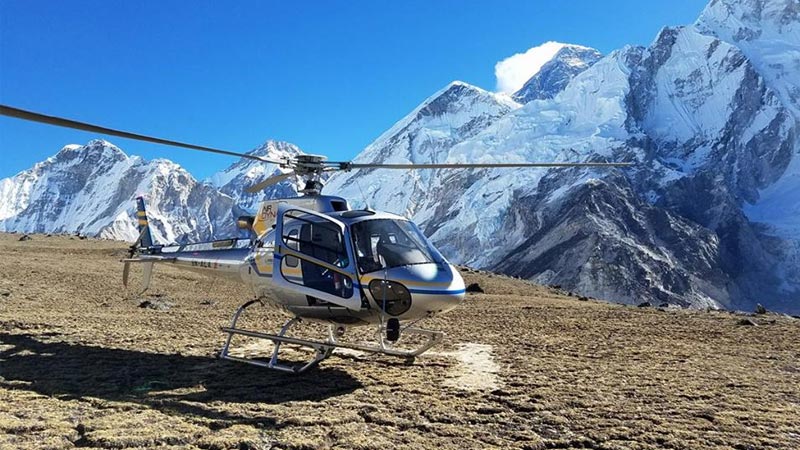
If you're planning an Everest helicopter tour, one of the most common questions you might have is, "Does the helicopter actually land at Everest Base Camp?" The answer is not as straightforward as many people expect. While the tour is widely known as the Everest Base Camp Helicopter Tour, most commercial helicopter flights do not land directly at Everest Base Camp. Instead, they typically land at Kala Patthar, a nearby viewpoint that offers the most spectacular close-up views of Mount Everest.
This often surprises travelers, but once you understand the reasons, it makes perfect sense. Factors such as safety, altitude, weather conditions, glacier movement, and aviation regulations all influence where helicopters can safely land in the Everest region.
In this guide, we'll explain where Everest helicopter tours land, why Kala Patthar is preferred over Everest Base Camp, what you can expect during your landing experience, and how to choose the right helicopter tour for an unforgettable journey to the roof of the world.
Does the Helicopter Land at Everest Base Camp?
The short answer is usually no.
Although the tour is called the Everest Base Camp Helicopter Tour, the helicopter generally lands at Kala Patthar (5,545 meters / 18,192 feet) instead of Everest Base Camp (5,364 meters / 17,598 feet). Kala Patthar is considered the best viewpoint in the Everest region because it offers unobstructed panoramic views of Mount Everest, Lhotse, Nuptse, Pumori, and the surrounding Himalayan peaks.
In certain situations, helicopters may briefly land at Everest Base Camp, particularly during the Everest climbing season when supporting mountaineering expeditions. However, these landings are not part of standard sightseeing tours and depend on weather conditions, glacier stability, aviation regulations, and operational requirements.
For most visitors, landing at Kala Patthar is actually a better experience. Unlike Everest Base Camp, where Mount Everest is partially hidden behind surrounding mountains, Kala Patthar provides a clear and breathtaking view of the world's highest peak.
If you're planning an unforgettable Himalayan adventure, our Everest Base Camp Helicopter Tour with Landing is designed to offer the safest and most scenic experience, including a landing at Kala Patthar whenever weather and operational conditions permit.
Why Don't Helicopters Usually Land at Everest Base Camp?
Many travelers assume that because the tour is named after Everest Base Camp, the helicopter will land there. In reality, several important factors make Kala Patthar the preferred landing destination.
Safety Comes First
Safety is always the highest priority during high-altitude helicopter operations. Everest Base Camp is situated on the constantly shifting Khumbu Glacier, which creates an unstable landing surface. Ice movement, hidden crevasses, and uneven terrain make it unsuitable for regular tourist helicopter landings.
Kala Patthar, while also located at a very high altitude, offers a more stable landing area under suitable weather conditions, making it a safer option for passengers and pilots.
Better Views of Mount Everest
One of the biggest misconceptions is that Everest Base Camp provides the best view of Mount Everest.
In reality, trekkers who reach Base Camp often discover that the summit of Everest is largely hidden behind nearby mountains. Kala Patthar, on the other hand, offers one of the most iconic viewpoints in the Himalayas. From here, visitors enjoy an uninterrupted panorama of Everest along with several other towering peaks.
For photography enthusiasts, this is the highlight of the entire helicopter tour.
High Altitude Performance
At elevations above 5,000 meters, helicopter performance is significantly affected by thinner air. Reduced air density limits lift capacity, meaning helicopters must carefully manage passenger weight and fuel loads.
For this reason, flights often make short stops and may divide passengers into smaller groups before flying to the highest landing point. These procedures help ensure safe operations throughout the journey.
Changing Glacier Conditions
Everest Base Camp is not a permanent, fixed location. Every year, the glacier shifts slightly due to natural ice movement, changing the terrain and affecting suitable landing spots.
Because of these constantly changing conditions, helicopter operators carefully assess each flight rather than relying on a permanent landing area.
Weather Can Change Quickly
The weather in the Everest region is highly unpredictable. Strong winds, snowfall, low visibility, and rapidly changing cloud cover can develop within minutes.
Experienced helicopter pilots continuously monitor weather conditions throughout the flight and will only land when it is safe to do so. If conditions are unfavorable, they may shorten the landing duration or adjust the itinerary to prioritize passenger safety.
Aviation Regulations
Helicopter operations in the Everest region are governed by aviation regulations designed to ensure safe flights in extreme mountain environments.
These regulations, combined with weight restrictions and altitude limitations, influence where helicopters can safely land during commercial sightseeing tours. As a result, Kala Patthar has become the standard landing destination for most Everest helicopter experiences.
Where Does the Helicopter Actually Land?
While many people refer to the experience as an Everest Base Camp landing tour, the helicopter usually lands at Kala Patthar, which is located just above Everest Base Camp.
Both locations are extraordinary, but they offer very different experiences.
Kala Patthar (5,545 meters)
Kala Patthar is the most popular landing destination for Everest helicopter tours and is widely recognized as the finest viewpoint in the Everest region.
Visitors who land here can enjoy:
- Spectacular panoramic views of Mount Everest
- Close-up views of Lhotse, Nuptse, Pumori, and surrounding Himalayan peaks
- Excellent photography opportunities
- A thrilling high-altitude landing experience
- An unforgettable perspective that most trekkers only reach after several days of hiking
Because of the extreme altitude, passengers usually spend around 10 to 15 minutes outside the helicopter before continuing the journey.
Everest Base Camp (5,364 meters)
Everest Base Camp is famous as the starting point for climbers attempting to summit Mount Everest.
During the spring climbing season, the area is filled with colorful expedition tents, mountaineers, guides, and support staff preparing for their ascent. Outside the climbing season, however, the campsite is often quiet and relatively empty.
Although Everest Base Camp is one of the world's most iconic trekking destinations, it is not the ideal location for sightseeing helicopter landings due to its glacier surface and limited views of Everest itself.
In special circumstances, helicopters involved in rescue missions, expedition logistics, or climbing support may land at Base Camp, but this is different from standard sightseeing operations.
Everest Base Camp vs Kala Patthar
| Feature | Everest Base Camp | Kala Patthar |
|---|---|---|
| Elevation | 5,364 m | 5,545 m |
| Standard Helicopter Landing | Rare | Yes |
| Mount Everest View | Partially obstructed | Panoramic and unobstructed |
| Photography | Good | Outstanding |
| Terrain | Moving glacier | More stable landing area |
| Popular for Sightseeing | Limited | Excellent |
For most travelers, Kala Patthar delivers the experience they imagine when booking an Everest helicopter tour. The breathtaking scenery, dramatic mountain backdrop, and iconic Everest views make it one of the most memorable helicopter landing sites anywhere in the world.
Can You Walk at Everest Base Camp During a Helicopter Tour?
This is another question travelers frequently ask before booking an Everest helicopter flight.
The answer depends on where the helicopter lands.
During a standard Everest helicopter tour, passengers usually walk around Kala Patthar, not Everest Base Camp itself. After landing, you'll have a brief opportunity to step outside, breathe the crisp mountain air, admire the breathtaking Himalayan scenery, and capture unforgettable photographs.
Because Kala Patthar sits at an elevation of more than 5,500 meters, the stop is intentionally kept short. Most landings last between 10 and 15 minutes, minimizing the effects of high altitude while still allowing enough time to enjoy the incredible surroundings.
If a helicopter were to land at Everest Base Camp under exceptional operational circumstances, passengers would still only spend a short amount of time on the ground. The purpose of these flights is sightseeing rather than extended exploration.
It's important to remember that a helicopter tour offers a very different experience from trekking to Everest Base Camp. Trekkers spend several days acclimatizing before reaching these elevations, whereas helicopter passengers ascend rapidly within a few hours. This is why short landing durations are essential for comfort and safety.
Whether you land at Kala Patthar or, in rare cases, Everest Base Camp, the experience of standing among the towering Himalayan giants is unforgettable and remains one of Nepal's most extraordinary travel experiences.
Everest Base Camp vs Kala Patthar Landing
When comparing the two locations, many first-time visitors naturally assume that Everest Base Camp must offer the better experience simply because of its world-famous name. However, experienced mountain guides, helicopter pilots, photographers, and seasoned travelers often recommend Kala Patthar instead.
Why Kala Patthar Is the Better Landing Spot
Kala Patthar offers an elevated viewpoint that places Mount Everest directly in front of you. From here, you can appreciate the sheer scale of the world's highest mountain without the surrounding ridges blocking your view.
The location also provides one of the most photographed panoramas in the Himalayas, making it the ideal place to capture memories of your Everest helicopter adventure.
Why Everest Base Camp Isn't Always the Best Viewpoint
Although standing at Everest Base Camp is an incredible achievement for trekkers, the surrounding mountains partially hide Everest's summit. The area is primarily designed as a staging ground for mountaineering expeditions rather than a scenic viewpoint.
Visitors arriving by helicopter are usually looking for spectacular mountain views, and Kala Patthar consistently delivers a far more rewarding visual experience.
Which Landing Experience Should You Choose?
If your goal is to witness the grandeur of Mount Everest, enjoy incredible photography opportunities, and experience one of the world's highest helicopter landings, Kala Patthar is the clear choice.
This is why reputable operators, including Easy Helicopter Nepal, focus on providing a safe landing at Kala Patthar whenever conditions allow. It combines breathtaking scenery, operational safety, and an unforgettable Himalayan experience into one extraordinary journey.
If you're looking for the ultimate aerial adventure, explore our Everest Base Camp Helicopter Tour with Landing, where you'll enjoy stunning Himalayan views, professional service, and the opportunity to experience the closest safe landing point to Mount Everest.
How Long Does the Helicopter Stay on the Ground?
One of the most exciting moments of an Everest helicopter tour is stepping out onto one of the highest accessible viewpoints in the world. However, because of the extreme altitude, the landing duration is intentionally kept short.
In most cases, the helicopter remains on the ground for 10 to 15 minutes at Kala Patthar. This gives passengers enough time to take in the breathtaking scenery, capture memorable photographs, and enjoy the unique experience of standing above 5,500 meters.
Several factors determine the exact landing time:
- Weather conditions
- Wind speed
- Visibility
- Passenger health and comfort
- Air traffic and aviation regulations
- Pilot safety assessment
Your pilot will provide clear instructions before landing and let you know exactly how much time is available. It is important to follow these instructions carefully, as spending too long at such a high altitude without proper acclimatization can increase the risk of altitude sickness.
Although the stop is brief, most travelers agree that those few minutes become the highlight of the entire journey.
Is Landing at Everest Base Camp Safe?
Yes, an Everest helicopter tour is considered very safe when operated by a licensed company with experienced mountain pilots and well-maintained helicopters.
Flying in the Everest region requires specialized skills due to the combination of high altitude, rapidly changing weather, and rugged Himalayan terrain. Professional helicopter operators follow strict safety procedures before and during every flight.
Experienced Mountain Pilots
Pilots flying in the Everest region undergo specialized training for high-altitude operations. They have extensive experience navigating mountain valleys, reading weather patterns, and handling helicopters in challenging conditions.
Their local knowledge and expertise play a vital role in ensuring a safe and enjoyable experience.
Continuous Weather Monitoring
Weather in the Himalayas can change quickly. Before departure and throughout the flight, pilots continuously monitor weather conditions and communicate with aviation authorities.
If visibility deteriorates or strong winds develop, the itinerary may be adjusted or postponed to ensure passenger safety.
Weight Management
At high altitude, helicopters cannot carry as much weight as they can at lower elevations. For this reason, operators carefully calculate passenger weight and fuel requirements before every flight.
Sometimes passengers are divided into smaller groups for the final ascent to Kala Patthar. While this may slightly extend the tour, it ensures safe helicopter performance.
Short Landing Duration
The limited time spent at Kala Patthar is also an important safety measure. Rapid ascent to high altitude without acclimatization means passengers should avoid prolonged exposure.
Keeping the landing brief allows everyone to enjoy the experience while minimizing altitude-related risks.
Regular Aircraft Maintenance
Reputable helicopter companies maintain their aircraft according to strict aviation standards and conduct routine inspections before every flight. This helps ensure reliability and safety throughout the journey.
At Easy Helicopter Nepal, passenger safety is always the highest priority. Every flight is operated with careful planning, experienced pilots, and a strong commitment to international aviation standards.
What Happens During an Everest Base Camp Helicopter Tour?
Although every operator may have slight variations, a typical Everest Base Camp helicopter tour follows a well-organized itinerary designed to maximize sightseeing while ensuring passenger safety.
Departure from Kathmandu
Your journey begins early in the morning from Kathmandu, when weather conditions are generally at their best. After a safety briefing, you'll board the helicopter and begin an unforgettable flight toward the Everest region.
As the city disappears beneath you, the landscape transforms into rolling hills, deep valleys, rivers, and snow-capped Himalayan peaks.
Refueling Stop at Lukla
The helicopter usually makes a short stop at Lukla, home to the famous Tenzing-Hillary Airport. This stop allows the aircraft to refuel before continuing deeper into the Khumbu region.
Depending on operational requirements and passenger weight, seating arrangements may also be adjusted before the next leg of the journey.
Scenic Flight Through the Khumbu Region
After departing Lukla, the scenery becomes increasingly spectacular. You'll fly over traditional Sherpa villages, ancient monasteries, alpine forests, glaciers, and dramatic mountain valleys.
Along the way, you'll enjoy aerial views of some of the world's highest peaks, including:
- Mount Everest (8,848.86 m)
- Lhotse
- Nuptse
- Ama Dablam
- Pumori
- Thamserku
This section of the flight is often considered one of the most scenic helicopter journeys anywhere in the world.
Landing at Kala Patthar
The highlight of the tour is the landing at Kala Patthar, weather and operational conditions permitting.
Here you'll step outside for approximately 10 to 15 minutes to admire panoramic views of Mount Everest and the surrounding Himalayan giants. It's the perfect opportunity to capture unforgettable photographs and experience the incredible atmosphere of the Everest region.
Breakfast at Everest View Hotel
Many premium Everest helicopter tours include a stop at the world-renowned Everest View Hotel.
Located in Syangboche, this luxury mountain hotel offers one of the finest breakfast experiences in Nepal, with stunning views of Mount Everest from the dining area.
Enjoying breakfast while surrounded by towering Himalayan peaks adds another memorable highlight to your adventure.
Return Flight to Kathmandu
After breakfast, the helicopter begins its scenic return journey to Kathmandu.
During the flight back, you'll have another opportunity to appreciate Nepal's diverse landscapes before arriving in the capital with memories that will last a lifetime.
If you're looking for a seamless and luxurious Himalayan experience, our Everest Base Camp Helicopter Tour with Landing combines breathtaking scenery, professional service, and carefully planned operations for an unforgettable adventure.
Best Time for an Everest Helicopter Landing
An Everest helicopter tour can be operated throughout much of the year, but certain seasons offer better weather, clearer mountain views, and more reliable flying conditions.
Spring (March to May)
Spring is one of the best seasons for an Everest helicopter tour.
The skies are generally clear during the morning, temperatures are comfortable, and the Himalayan landscape comes alive with blooming rhododendron forests. This is also the Everest climbing season, when Base Camp is filled with colorful expedition tents.
Why choose spring?
- Excellent mountain visibility
- Stable weather
- Pleasant temperatures
- Vibrant landscapes
Autumn (September to November)
Autumn is widely regarded as the finest season for helicopter tours in Nepal.
After the monsoon, dust and pollution are washed away, creating exceptionally clear skies and spectacular panoramic mountain views.
This season is ideal for photography and offers highly reliable flying conditions.
Why choose autumn?
- Crystal-clear visibility
- Stable weather
- Comfortable temperatures
- Outstanding photography opportunities
Winter (December to February)
Winter offers some of the clearest mountain views of the year.
While temperatures are much colder, the snow-covered Himalayan landscape creates an unforgettable setting for aerial sightseeing.
Morning flights remain the best option to avoid stronger afternoon winds.
Monsoon (June to August)
The monsoon season brings increased rainfall, cloud cover, and reduced visibility across much of Nepal.
Although helicopter flights are still possible on suitable weather windows, delays and rescheduling are more common during this period.
If flexibility is important, consider traveling during spring or autumn for the most consistent experience.
Frequently Asked Questions
Does every Everest helicopter tour land at Everest Base Camp?
No. Most sightseeing helicopter tours land at Kala Patthar rather than Everest Base Camp because it offers better views and safer landing conditions.
Why do helicopters land at Kala Patthar instead?
Kala Patthar provides unobstructed views of Mount Everest, a more suitable landing area, and complies with operational safety requirements for commercial sightseeing flights.
Can helicopters land at Everest Base Camp?
Yes, but only under specific circumstances such as expedition support, rescue missions, or when conditions permit. It is not the standard landing location for tourist helicopter tours.
How close does the helicopter get to Mount Everest?
The helicopter flies very close to Mount Everest and lands at Kala Patthar, one of the nearest accessible viewpoints for visitors without trekking.
How long is the Everest helicopter tour?
A typical Everest Base Camp helicopter tour lasts approximately 4 to 5 hours, including flight time, landing, and breakfast stop, depending on weather and operational conditions.
Is altitude sickness a concern?
Because passengers ascend rapidly, landing time is intentionally limited to reduce the effects of high altitude. Most travelers complete the tour comfortably by following the pilot's instructions.
Is the tour suitable for children and senior travelers?
Yes. Since the tour requires very little physical effort, it is an excellent option for families, children, and senior travelers who want to experience the Everest region without trekking.
What should I wear?
Dress in warm layers and wear comfortable shoes. Sunglasses, sunscreen, gloves, and a warm jacket are highly recommended, especially during spring, autumn, and winter.
What happens if the weather is bad?
Safety always comes first. If weather conditions are unsuitable for flying, the flight may be delayed, rescheduled, or canceled according to the operator's policy.
Is the landing guaranteed?
Landing always depends on weather, visibility, wind conditions, and the pilot's safety assessment. While operators aim to land at Kala Patthar whenever possible, safety will always take priority.
Final Thoughts
An Everest helicopter tour is one of the most extraordinary travel experiences in Nepal, offering breathtaking aerial views of the Himalayas in just a few hours. While many travelers expect to land directly at Everest Base Camp, the reality is that Kala Patthar provides a safer landing location and a far superior panoramic view of Mount Everest.
Understanding the difference between Everest Base Camp and Kala Patthar helps set the right expectations and ensures you appreciate why this landing has become the standard for premium Everest helicopter tours. From soaring above glaciers and Sherpa villages to standing at one of the world's highest viewpoints, every moment of the journey is unforgettable.
If you're ready to experience the Himalayas from a truly unique perspective, our Everest Base Camp Helicopter Tour with Landing offers the perfect combination of safety, comfort, and spectacular mountain scenery. Whether you're visiting Nepal for a short holiday or celebrating a special occasion, this once-in-a-lifetime adventure promises memories that will stay with you forever.
On 02 Jul 2026
Recent From Blogs

17 Jun 2023

17 Feb 2024


19 Aug 2025


21 Aug 2025


