
Is Everest Base Camp Helicopter Tour Safe? Safety Standards & Guidelines Explained
Introduction
The Everest Base Camp Helicopter Tour has become one of the most popular travel experiences in Nepal. Every year, thousands of travelers choose this scenic helicopter journey to witness the world’s highest mountain up close without spending weeks trekking through the Himalayas. Within just a few hours, visitors can enjoy breathtaking aerial views of snow-capped peaks, deep valleys, Sherpa villages, and the legendary Everest region.
Despite its growing popularity, many travelers naturally wonder about one important question: Is the Everest Base Camp Helicopter Tour safe? Flying in the high Himalayas can sound intimidating, especially for those unfamiliar with mountain aviation. Factors such as high altitude, changing weather conditions, and rugged terrain often raise concerns among first-time visitors.
The good news is that helicopter tours in Nepal operate under strict aviation regulations and well-established safety standards. Licensed helicopter companies follow guidelines set by the Civil Aviation Authority of Nepal (CAAN), ensuring that aircraft maintenance, pilot certification, and operational procedures meet international aviation safety requirements. Modern helicopters used for Everest flights are specifically designed to perform in high-altitude environments, and pilots flying these routes are highly experienced in mountain operations.
In this guide, we will explain the key safety aspects of the Everest Base Camp Helicopter Tour, including aviation regulations, helicopter technology, pilot expertise, weather considerations, and important safety guidelines for passengers. By the end of this article, you will have a clear understanding of why this Himalayan helicopter adventure is considered safe and reliable when operated by a licensed and reputable helicopter company.
Understanding the Everest Base Camp Helicopter Tour
What Is the Everest Base Camp Helicopter Tour?
The Everest Base Camp Helicopter Tour is a remarkable aerial journey that allows travelers to experience the majestic Everest region within a few hours. Instead of trekking for days through rugged mountain trails, visitors can reach the heart of the Himalayas quickly and comfortably by helicopter. This tour offers breathtaking panoramic views of towering peaks, deep valleys, glaciers, and remote Sherpa settlements that are otherwise accessible only after a long trek.
The typical flight begins in Kathmandu and heads east toward the famous mountain airstrip at Lukla, often considered the gateway to the Everest region. From Lukla, the helicopter continues deeper into the Khumbu Valley, flying over iconic trekking destinations such as Namche Bazaar, Tengboche, and other picturesque Himalayan landscapes. The journey then approaches the Everest region itself, where passengers can witness extraordinary views of some of the world’s highest mountains.
Most helicopter tours include a flyover or landing near Kalapatthar, one of the best viewpoints for Mount Everest, offering an unobstructed panorama of the surrounding Himalayan giants. Depending on the specific tour package, some flights may also include a landing at Everest Base Camp or nearby high-altitude locations before returning to Kathmandu.
The entire experience usually lasts three to five hours, making it one of the most efficient ways to explore the Everest region. Some tours include short landings for photography and sightseeing, while others focus on scenic overflights that provide uninterrupted views of the Himalayan landscape.
Why Travelers Choose Helicopter Tours Over Trekking
While trekking to Everest Base Camp remains a legendary adventure, many travelers now prefer the helicopter tour as a practical and luxurious alternative. One of the main reasons is the significant amount of time saved. A traditional Everest Base Camp trek typically requires around 12 to 14 days, whereas a helicopter tour allows visitors to see the same spectacular region in just a few hours.
This option is especially appealing for travelers who have limited time in Nepal but still wish to witness the beauty of Mount Everest up close. Business travelers, luxury tourists, families, and older visitors often choose helicopter tours because they provide access to the Himalayas without the physical demands of a multi-day trek.
In addition to convenience, the helicopter experience offers a unique perspective of the Himalayan landscape. Passengers enjoy uninterrupted aerial views of dramatic mountain ranges, massive glaciers, and remote valleys that are difficult to appreciate from the ground. The comfort of flying above the rugged terrain while observing some of the world's highest peaks creates a truly memorable and scenic Himalayan experience.
Is Everest Base Camp Helicopter Tour Safe?
Overall Safety Record of Helicopter Tours in Nepal
Helicopter tourism in Nepal has grown steadily over the past two decades and has become an important part of the country’s mountain travel industry. Thousands of flights operate each year in the Everest region, serving trekkers, mountaineers, rescue operations, and scenic tours. With this long history of operations in high-altitude environments, Nepal has developed strong aviation practices specifically suited for mountain flying.
Reputable helicopter operators follow strict operational procedures that prioritize passenger safety. Aircraft maintenance, pilot training, and flight operations are regulated by the Civil Aviation Authority of Nepal, which ensures that helicopters used for commercial flights meet established aviation safety standards. Regular inspections and technical checks are conducted to maintain the reliability and airworthiness of the aircraft.
As a result, helicopter tours to Everest have built a strong reputation among international travelers. Many visitors from around the world choose this experience each year because it offers a safe and efficient way to explore the Himalayan region without the challenges of trekking at extreme altitudes.
Why Helicopters Are Ideal for High-Altitude Travel
Helicopters are uniquely suited for operating in mountainous environments like the Himalayas. Unlike fixed-wing aircraft, helicopters have the ability to maneuver through narrow valleys, hover above rugged terrain, and land in remote high-altitude locations where conventional planes cannot operate.
Another important advantage is the relatively short flight duration. Since the helicopter reaches the Everest region quickly, passengers spend only a limited amount of time at extreme altitudes. This reduces the risk of altitude-related discomfort that trekkers may experience during long expeditions.
Modern helicopters used for Everest flights are also specifically designed to perform in challenging environments. Their powerful engines, advanced flight systems, and high-altitude capabilities allow them to operate safely in thin mountain air and varying weather conditions. Combined with experienced mountain pilots and careful flight planning, these aircraft make helicopter tours one of the most practical and reliable ways to explore the high Himalayas.
Aviation Safety Regulations in Nepal
Role of the Civil Aviation Authority of Nepal (CAAN)
The safety of helicopter operations in Nepal is closely regulated by the Civil Aviation Authority of Nepal (CAAN), the government body responsible for overseeing all aviation activities in the country. CAAN plays a crucial role in ensuring that both domestic and international flights operating within Nepal follow strict aviation standards designed to protect passengers, crew members, and aircraft.
One of the primary responsibilities of CAAN is regulating helicopter flight operations throughout the country, including those operating in the challenging Himalayan environment. Helicopter companies must obtain official authorization and operate under clearly defined aviation rules before conducting commercial flights such as Everest Base Camp helicopter tours.
In addition to operational regulation, CAAN also enforces strict maintenance and technical standards for aircraft. Helicopters used for commercial tourism must undergo regular inspections and maintenance checks to ensure that all systems remain in optimal working condition. These inspections are conducted according to established aviation guidelines, helping maintain a high level of reliability and safety in the industry.
Another key responsibility of the authority is issuing licenses to both pilots and helicopter operators. Pilots must complete extensive training and demonstrate the necessary experience to operate aircraft safely in Nepal’s mountainous terrain. Similarly, helicopter companies must maintain valid operating certificates and comply with aviation regulations before offering services to travelers.
Through these regulatory measures, the Civil Aviation Authority of Nepal helps ensure that helicopter tourism, including flights to the Everest region, operates under a structured and well-monitored aviation safety framework.
Mandatory Safety Compliance for Helicopter Operators
Helicopter companies that operate flights to Everest Base Camp are required to follow strict safety compliance procedures established by aviation authorities. These regulations are designed to maintain high operational standards and ensure that every flight is conducted safely.
One of the most important aspects of compliance is regular aircraft inspection and maintenance. Helicopters must undergo scheduled technical checks performed by certified engineers to confirm that engines, navigation systems, safety equipment, and other critical components are functioning properly. These routine inspections help detect potential issues early and maintain the aircraft’s airworthiness.
Another key safety requirement is the use of certified and experienced pilots. Pilots flying in the Everest region must hold valid aviation licenses and undergo specialized training in mountain flying. Operating in high-altitude terrain requires advanced navigation skills, weather awareness, and familiarity with Himalayan flight routes.
Helicopter operators must also follow strict flight regulations when operating in mountain regions. These rules include weather monitoring procedures, safe passenger weight limits, altitude performance considerations, and clear operational guidelines for takeoff, landing, and emergency protocols. Such regulations ensure that flights are conducted only when conditions are suitable and safe for both passengers and crew.
By complying with these mandatory safety standards, reputable helicopter companies maintain a high level of professionalism and reliability when operating scenic flights to the Everest region.
Aircraft Used for Everest Helicopter Tours
Types of Helicopters Commonly Used
Helicopter tours to Everest Base Camp are conducted using aircraft specifically designed to perform in high-altitude and mountainous environments. Tour operators in Nepal typically rely on modern, well-tested helicopter models known for their power, reliability, and performance in extreme conditions.
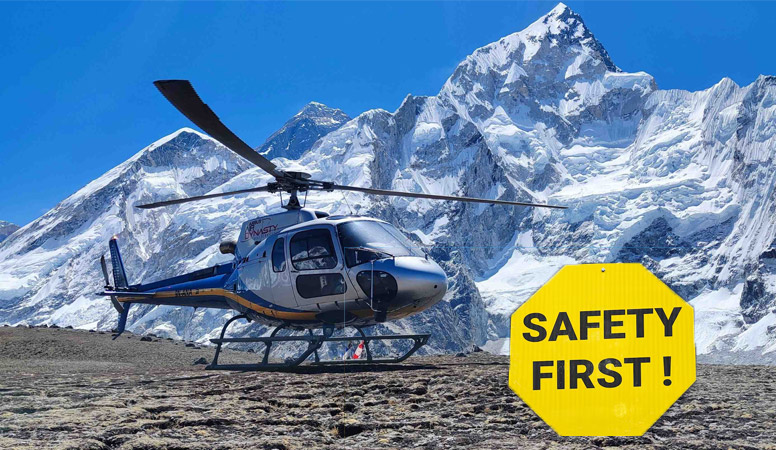
Two of the most commonly used helicopters for Everest flights include the Airbus H125 (AS350 B3e) and the Bell 407. These aircraft are widely used around the world for mountain operations, rescue missions, and high-altitude transport due to their strong performance capabilities.
The Airbus H125 is particularly well known for its exceptional altitude performance and has been used in various high-elevation operations across the Himalayas. Similarly, the Bell 407 is valued for its reliability, smooth flight performance, and ability to operate effectively in challenging terrain. Both helicopters are capable of carrying small groups of passengers while maintaining stable and efficient flight in mountainous conditions.
Why These Helicopters Are Designed for High Altitudes
Helicopters used for Everest Base Camp tours are equipped with powerful turbine engines that allow them to perform efficiently even in the thin air found at high altitudes. As elevation increases, air density decreases, which can affect aircraft performance. These specialized helicopters are engineered to maintain strong lifting power and stable flight even in such conditions.
Another key advantage is their high-altitude capability. Models like the Airbus H125 are designed to operate at extreme elevations and have proven their performance in some of the world’s highest mountain regions. This capability makes them ideal for flights that approach areas near Everest Base Camp and surrounding Himalayan viewpoints.
In addition to engine power, these helicopters are built with advanced aerodynamic designs and flight control systems that provide excellent stability in changing mountain weather conditions. The ability to remain steady while navigating through valleys, ridges, and high-altitude terrain helps pilots maintain safe and controlled flight paths throughout the journey.
Because of these engineering features, helicopters used for Everest tours are well suited for the demanding environment of the Himalayas, making them a reliable choice for scenic flights in one of the most spectacular mountain landscapes on Earth.
Pilot Experience and Training
Highly Experienced Mountain Pilots
One of the most important factors that ensures the safety of an Everest Base Camp helicopter tour is the experience and training of the pilots. Flying in the Himalayas requires a very high level of skill, precision, and familiarity with mountain environments. For this reason, helicopter pilots operating in the Everest region are typically highly experienced professionals who have accumulated thousands of flight hours, many of which are specifically in mountainous terrain.
Mountain flying is very different from flying over flat landscapes. Pilots must understand complex air patterns, narrow valleys, and rapidly changing weather conditions that are common in high-altitude regions. Because of these challenges, pilots undergo specialized mountain flying training before they are authorized to operate flights in areas like the Everest region.
This training focuses on high-altitude aircraft performance, safe landing procedures in remote areas, and advanced navigation techniques required in mountainous environments. With years of experience and specialized training, these pilots are well prepared to manage the unique challenges of flying in the Himalayas while maintaining a strong focus on passenger safety.
How Pilots Handle High-Altitude Flying
Operating a helicopter in the Everest region requires careful planning and constant awareness of the surrounding environment. Pilots must use advanced terrain navigation skills to safely maneuver through valleys, mountain ridges, and high-altitude landing areas. Understanding the geography of the Everest region is essential for selecting safe flight paths and avoiding potential hazards.
Another critical aspect of mountain flying is wind and weather awareness. The Himalayas are known for complex wind patterns that can change quickly depending on the time of day and weather conditions. Experienced pilots continuously monitor wind direction, cloud formations, and visibility levels throughout the flight to ensure safe operations.
Pilots also follow strict altitude safety procedures when approaching high-elevation locations such as Kalapatthar or other Everest viewpoints. These procedures include managing aircraft weight, maintaining safe hover performance, and limiting time spent at extreme altitudes when necessary. By carefully applying these operational techniques, pilots can safely conduct helicopter tours while minimizing risks associated with high-altitude flying.
Weather and Safety Considerations
Importance of Weather Monitoring
Weather conditions play a crucial role in determining whether an Everest Base Camp helicopter flight can operate safely. The Himalayan region is known for its dramatic landscapes, but it is also known for rapidly changing weather patterns. Clear skies can quickly turn into clouds, strong winds, or snowfall, which may affect visibility and flight conditions.
Because of this, helicopter tours in the Everest region rely heavily on accurate weather monitoring and forecasting. Before every flight, pilots and helicopter operators carefully review weather reports, satellite data, and aviation forecasts to determine whether conditions are suitable for flying. These evaluations help ensure that flights are conducted only when weather conditions are safe and stable.
Throughout the day, operators continue to monitor weather updates from various sources in the Everest region. If there are signs of deteriorating weather conditions, flights may be delayed or adjusted to maintain the highest level of safety for passengers and crew.
Why Flights Are Scheduled Early in the Morning
Most Everest Base Camp helicopter tours are scheduled during the early morning hours, typically between 6 AM and 9 AM. This timing is not random but is based on the natural weather patterns of the Himalayas.
During the early morning, the skies are usually clearer and the atmosphere tends to be more stable. Winds are generally lighter, and visibility is at its best, allowing pilots to navigate safely while providing passengers with spectacular views of the surrounding mountain peaks.
As the day progresses, sunlight heats the terrain, which can create stronger winds, clouds, and turbulence in mountainous areas. By operating flights early in the morning, helicopter operators take advantage of the most stable and predictable weather conditions of the day, further improving the safety and comfort of the flight.
What Happens If Weather Is Unsafe?
Safety always takes priority over schedules when it comes to flying in the Himalayas. If weather conditions are not suitable for safe flight operations, helicopter tours may be delayed, rescheduled, or occasionally canceled.
While this can sometimes be inconvenient for travelers, it is an important safety precaution that ensures passengers are not exposed to unnecessary risk. Professional helicopter operators will never proceed with a flight if visibility, wind conditions, or other weather factors fall outside safe operational limits.
In most cases, operators will work with passengers to reschedule the flight for a later time or another day when conditions improve. This flexible approach allows travelers to still experience the Everest helicopter tour while maintaining strict safety standards throughout the journey.
Weight Limit and Passenger Safety
Why Helicopter Weight Limits Matter
Weight management is a critical safety factor for helicopter operations, especially when flying in high-altitude environments like the Everest region. As altitude increases, the air becomes thinner, which can affect the helicopter’s lifting capability and overall performance. To maintain safe flight conditions, helicopter operators must carefully manage the total weight carried on each flight, including passengers, fuel, and cargo.
Maintaining proper weight limits ensures that the helicopter can operate efficiently and safely in the thin air of the Himalayas. When the aircraft is within its recommended load capacity, the pilot has better control, improved stability, and stronger lift performance during takeoff, landing, and maneuvering in mountainous terrain.
Balanced weight distribution is also essential for safe flying. Helicopter crews carefully arrange passenger seating and luggage placement to maintain proper balance within the aircraft. These precautions help ensure that the helicopter remains stable throughout the flight, particularly during landings at high-altitude viewpoints near Everest.
Passenger Group Splitting at High Altitude
During Everest Base Camp helicopter tours, it is common for operators to temporarily divide passengers into smaller groups when approaching high-altitude areas. This procedure is a normal safety practice designed to reduce aircraft weight when landing or hovering at extreme elevations.
For example, when flying close to Everest Base Camp or viewpoints like Kalapatthar, helicopters may land at lower-altitude locations such as Pheriche or nearby areas to drop off part of the passenger group. The helicopter then makes short shuttle flights, carrying a smaller number of passengers at a time to the higher landing point.
This process helps maintain optimal helicopter performance and ensures safe operations in thin mountain air. Although it may add a few extra minutes to the tour, passenger shuttling is a standard safety practice used by experienced operators in the Everest region.
Health and Altitude Safety
Risk of Altitude Sickness
Altitude sickness is a common concern for travelers visiting high mountain regions, including the Everest area. However, the risk during an Everest Base Camp helicopter tour is generally lower compared to trekking because passengers spend only a short amount of time at extreme elevations.
Most helicopter tours involve brief stops or short sightseeing periods at high-altitude locations such as Kalapatthar or viewpoints near Everest Base Camp. Because the exposure time is limited, the body typically does not have enough time to develop significant altitude-related symptoms.
In addition, pilots and tour operators closely monitor the time spent at higher elevations to minimize potential discomfort for passengers. If anyone shows signs of altitude-related symptoms, the helicopter can quickly descend to a lower altitude where oxygen levels are higher and conditions are more comfortable.
Tips to Stay Comfortable During the Flight
Although the risk of altitude sickness is relatively low during helicopter tours, travelers can still take a few simple precautions to remain comfortable throughout the experience. Staying well hydrated before and during the trip helps the body adjust more easily to altitude changes.
It is also recommended to avoid heavy meals or alcohol before the flight, as these can sometimes increase feelings of discomfort at higher elevations. Eating light and staying hydrated can help passengers feel more relaxed during the journey.
Finally, passengers should follow the instructions provided by the pilot and ground crew at all times. These guidelines are designed to ensure both safety and comfort during the flight, including advice about movement around the helicopter, landing procedures, and time spent at high-altitude viewpoints. By following these simple recommendations, travelers can enjoy a smooth and memorable helicopter experience in the Everest region.
Safety Guidelines for Passengers
Follow Crew Instructions at All Times
Passenger cooperation plays an important role in maintaining safety during an Everest Base Camp helicopter tour. Before the flight begins, the crew usually provides a short safety briefing explaining important procedures related to boarding, landing, and in-flight behavior. These instructions are designed to ensure that all passengers remain safe and comfortable throughout the journey.
During boarding and landing, passengers should carefully follow the directions given by the ground crew or pilot. Helicopter blades continue rotating during these moments, so approaching or leaving the aircraft must always be done from the designated direction instructed by the crew. This helps prevent unnecessary risks while moving around the helicopter.
Passengers are also required to wear seatbelts throughout the flight. Seatbelts ensure stability and safety, particularly when the helicopter is navigating mountainous terrain or experiencing mild turbulence. Following these simple safety measures allows the crew to conduct the flight smoothly and securely.
Proper Clothing and Preparation
Preparing properly for the flight can significantly improve both comfort and safety during the Everest helicopter experience. Even though the tour lasts only a few hours, passengers will be flying at high altitudes where temperatures can be much colder than in Kathmandu.
Wearing warm layers is highly recommended, as temperatures in the Everest region can be freezing even on clear days. Layered clothing allows passengers to adjust easily depending on the temperature during different stages of the flight.
Sunglasses are also useful because sunlight reflecting off snow-covered mountains can be very bright at high altitude. In addition, comfortable footwear is recommended, especially for tours that include short landings for sightseeing or photography. Proper preparation ensures passengers can fully enjoy the spectacular Himalayan views without discomfort.
Secure Loose Items
Another important safety guideline is to keep all loose belongings secure while near the helicopter. Strong rotor winds generated by the helicopter blades can easily blow away lightweight items such as hats, scarves, papers, or bags.
Passengers should ensure that personal belongings, cameras, and small accessories are safely held or stored before approaching the aircraft. This precaution not only protects personal items but also prevents objects from being pulled into the rotor area, which could create potential safety hazards. By keeping belongings secure, passengers help maintain a safe environment during boarding and landing.
Choosing a Reputable Helicopter Tour Operator
Verify Company License and Certification
Selecting a reputable helicopter company is one of the most important steps in ensuring a safe Everest helicopter tour. Travelers should always verify that the tour operator works with registered helicopter companies that hold proper aviation licenses and permits.
Licensed operators must comply with strict regulations established by aviation authorities. These regulations cover aircraft maintenance, pilot qualifications, operational procedures, and safety protocols. Choosing a company that follows these standards ensures that the helicopter tour is conducted according to recognized aviation safety practices.
Before booking, travelers can also check whether the operator has proper business registration, aviation approvals, and partnerships with licensed helicopter service providers in Nepal.
Check Pilot Experience and Safety Record
The experience of the pilot is another critical factor when evaluating a helicopter tour operator. Flying in the Himalayas requires advanced skills, and experienced mountain pilots are essential for safe operations in high-altitude terrain.
Reputable helicopter companies employ pilots who have accumulated extensive flight hours and specialized mountain flying experience. These professionals understand the unique conditions of the Everest region, including wind patterns, terrain navigation, and altitude performance requirements.
Travelers should feel confident knowing that qualified pilots with proven safety records are responsible for operating flights in one of the world’s most challenging flying environments.
Transparent Pricing and Professional Service
A trustworthy helicopter tour operator will always provide clear and transparent pricing along with detailed information about the tour package. This includes explaining what is included in the price, such as flight duration, landing opportunities, permits, and any additional services.
Travelers should be cautious of operators offering unusually low prices that seem significantly cheaper than standard market rates. In some cases, extremely low prices may indicate unreliable services, hidden costs, or lower operational standards.
Choosing a professional operator with a good reputation, transparent communication, and reliable customer service helps ensure that the Everest helicopter tour experience is not only memorable but also conducted with the highest level of safety and professionalism.
Common Misconceptions About Everest Helicopter Tour Safety
“Helicopter Flights in the Himalayas Are Dangerous”
One of the most common concerns travelers have is the belief that helicopter flights in the Himalayan region are inherently dangerous. While the mountains present unique challenges, modern aviation technology and professional flight operations have made helicopter tours in Nepal significantly safer than many people assume.
Helicopters used for Everest tours are equipped with advanced flight systems and are regularly maintained according to strict aviation standards. In addition, these flights are operated by highly experienced pilots who are specifically trained in mountain flying. Their expertise in navigating high-altitude terrain, understanding wind patterns, and managing changing weather conditions plays a critical role in ensuring safe flight operations.
Professional helicopter companies also follow strict operational procedures, including pre-flight inspections, weather assessments, and carefully planned flight routes. Flights are only conducted when conditions meet safe operational standards. These combined safety measures help ensure that helicopter tours in the Everest region remain a reliable and well-managed travel experience.
“Altitude Makes Helicopter Flights Risky”
Another common misconception is that the high altitude of the Everest region automatically makes helicopter flights unsafe. In reality, helicopters used for mountain operations are specifically designed to function effectively in high-altitude environments where air density is lower.
Aircraft models commonly used for Everest flights are equipped with powerful engines and advanced rotor systems that allow them to generate sufficient lift even in thin mountain air. These helicopters have been tested and proven capable of operating safely at high elevations across mountainous regions around the world.
Pilots also carefully manage aircraft performance by controlling weight limits, monitoring engine performance, and following strict altitude procedures. In some cases, passengers may be transported in smaller groups when landing at higher elevations to ensure optimal aircraft performance. With these operational practices in place, helicopters are well suited for navigating the challenging yet spectacular environment of the Himalayas.
Who Should Avoid the Everest Helicopter Tour?
People With Serious Heart or Respiratory Conditions
Although the Everest Base Camp helicopter tour is generally safe for most travelers, individuals with certain medical conditions should take additional precautions before participating. People who have serious heart problems, severe respiratory conditions, or other health issues that may be affected by altitude should consult a qualified medical professional before booking the flight.
The Everest region reaches very high elevations, and even though passengers typically spend only a short amount of time at these altitudes, it is important to ensure that the body can safely handle the change in oxygen levels. A medical consultation can help determine whether the helicopter tour is appropriate for individuals with existing health concerns.
Travelers Sensitive to High Altitude
Some travelers are naturally more sensitive to high altitude, even during short visits to elevated areas. While helicopter tours minimize exposure time compared to trekking, mild symptoms such as headaches or dizziness can occasionally occur when visiting high-altitude viewpoints.
Travelers who know they are sensitive to altitude should take simple precautions to stay comfortable during the tour. Staying hydrated, avoiding alcohol before the flight, and following the pilot’s instructions about time spent at higher elevations can help reduce the likelihood of discomfort.
In most cases, helicopter tours remain a comfortable option for visitors because the aircraft can quickly descend to lower altitudes if needed. With proper awareness and preparation, most travelers can safely enjoy the incredible experience of flying through the Everest region.
Why Thousands of Travelers Safely Take the Everest Helicopter Tour Every Year
The Everest Base Camp Helicopter Tour has become one of the most sought-after travel experiences in Nepal, attracting thousands of visitors from around the world every year. As global tourism in the Himalayas continues to grow, more travelers are choosing helicopter tours as a convenient and safe way to witness the beauty of Mount Everest without committing to a multi-day trek.
The increasing popularity of these tours reflects the trust that travelers place in Nepal’s helicopter tourism industry. Over the years, professional helicopter operators have built strong reputations by maintaining high safety standards, employing experienced mountain pilots, and operating well-maintained aircraft designed for high-altitude conditions. These factors have helped establish helicopter tours as a reliable option for exploring the Everest region.
Another reason for the tour’s popularity is the efficiency it offers. In just a few hours, travelers can enjoy breathtaking aerial views of the Himalayan landscape, including glaciers, valleys, Sherpa villages, and some of the world’s highest mountains. This makes the helicopter tour an ideal choice for those who want to experience the Everest region in a short amount of time while still enjoying an unforgettable adventure.
For many visitors, the Everest helicopter tour represents a once-in-a-lifetime opportunity to see the world’s tallest peak up close while traveling in comfort and safety.
Conclusion
The Everest Base Camp Helicopter Tour is widely regarded as a safe and well-managed adventure when operated by licensed and reputable helicopter companies. While flying in the Himalayan region naturally raises questions for first-time visitors, the industry has developed strong safety systems designed specifically for high-altitude operations.
Several important factors contribute to the overall safety of these tours. Experienced mountain pilots with extensive flight hours operate the helicopters, ensuring skilled navigation through challenging terrain. The aircraft used for these flights are modern helicopters built for high-altitude performance, capable of operating efficiently in the thin air of the Himalayas. In addition, strict aviation regulations, routine aircraft inspections, and professional operational standards help maintain reliability throughout the industry.
Weather monitoring is another key component of safety. Flights are carefully scheduled during the most stable hours of the day, and operators closely observe weather conditions before every departure. If conditions are not suitable, flights are delayed or rescheduled to ensure passenger safety remains the top priority.
With these precautions in place, helicopter tours have become one of the safest and most efficient ways to experience the Everest region. For travelers seeking a breathtaking view of the world’s highest mountain without the demands of trekking, this journey offers an extraordinary opportunity.
By choosing a reputable helicopter operator and planning the tour carefully, travelers can enjoy a safe, comfortable, and truly unforgettable Himalayan adventure.
Everest Base Camp Helicopter Tour with Landing
Experience Everest up close and land near the world’s highest peak. Book your Everest Base Camp landing tour now for a once-in-a-lifetime Himalayan adventure!
https://www.easyhelicopternepal.com/everest-base-camp-helicopter-tour-with-landing
Everest Base Camp Overfly Helicopter Tour
Soar above Everest and the majestic Himalayas without leaving your seat. Reserve your scenic overfly tour today and witness the breathtaking peaks from the sky!
https://www.easyhelicopternepal.com/everest-base-camp-overfly-helicopter-tour
On 05 Mar 2026
Recent From Blogs

17 Jun 2023

17 Feb 2024


19 Aug 2025


21 Aug 2025


